Monthly Archives: April 2011

Vegan Food Found in Orange County

The third in a series of  Restaurant Reviews On My Trip to Orange County, and Los Angeles, CA. The previous posts were Satisfying Soul in OC, and Is Gluten-Free Dairy Free Worth It.

Nestled in a monstrous outdoor shopping mall called The District, snuggled in next to a multiplex cinema and a clothing store is a little place called Native Foods Cafe. This seems to be the most unlikely of places for a vegan restaurant, let alone one that focuses on Southwestern food., but it is a great restaurant in Tustin, California.
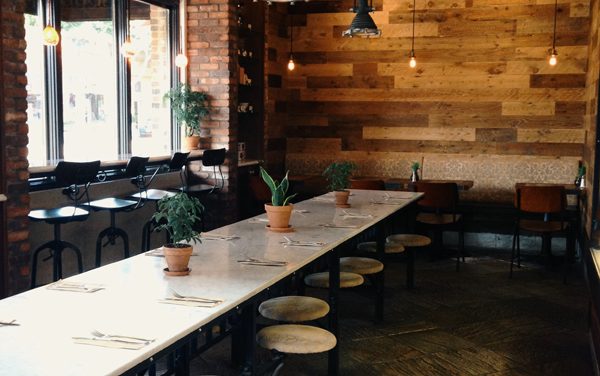
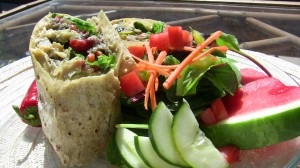
It was the dinner hour on a Saturday night, but not as busy as I expected. That could have been due to the weather. When we walked in I realized that it was the typical order-at-the-counter-seat-yourself style bistro. I actually went on a vocal rant about this later on, after our visits to other vegan eateries. (Why do vegan restaurants assume the clientele wants to seat itself with a number on the table?) The restaurant itself was decorated in earth tones, rich browns, and deep reds and orange. Some white was thrown in to break up the color scheme. I remember some avocado green as well.

We settled in with our drinks and waited for the food. The Partner ordered the Rockin Moroccan bowl, and I decided on the Portobella and Sausage Burger with Sweet Potato Fries (one of my little known addictions is sweet potatoes). When the food was delivered, it was hot, gorgeous and very delicious. The Bowl came with tofu, quinoa and loads of veggies bright, crisp and not over-cooked. My “burger” was scrumptious. I love pesto in all its forms, and loved the pumpkin pesto on this tasty sandwich. The dishes we dined on followed through with the restaurant color scheme of oranges, browns, and a little yellow.

Chef Tanya Petrovna has really outdone herself with this great restaurant concept. And it’s obvious she’s doing great busines, Native Food Cafe is opening three new restaurants in Chicago, IL this coming summer.

You can read a little more about Native Foods Cafe food here, and while your visiting, check out the menu. If you go on a weekend, expect to compete with movie-goers and diligent clothes shoppers for parking, and possibly longer lines to get a table to eat this outstanding food by this very active vegan Chef.


Share

Fresh and Lively Herb Vinaigrette

Want something to do with all those fresh herbs that are available now that springtime is here? I’m a fan of vinaigrettes. They make great salad dressings, and awesome marinades. I love the play between the tang of a good vinegar, and the earthiness of herbs, or sweetness of citrus.

So try this out the next time you are at your local Farmer’s Market salivating over parsley, basil, and thyme.

This is an all-around salad dressing and marinade that is made in your blender. (Or with an Immersion Blender). Using fresh herbs ensures a taste that will awaken the palate, and bring salads to new heights. As a marinade it will add that special essence you need to grilled vegetables, or tofu and seitan.

Tools

  • A Blender or Immersion blender
  • A knife
  • A clean 1 quart jar

Ingredients

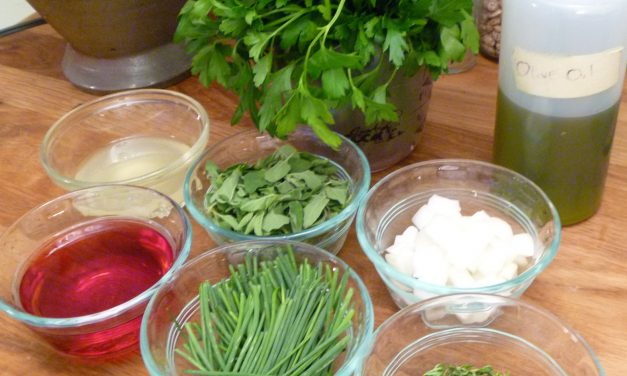
  • 2 tbsp fresh Oregano, cleaned, stems removed
  • 2 tbsp fresh Thyme, cleaned, stems removed
  • 1/3 cup Basil leaves, packed
  • 1/4 cup Parsley, chopped, stems removed
  • 1 tbsp lemon juice
  • 3 tbsp White or Red Vinegar
  • 1 cup Olive Oil
  • S & P to taste
  • 2 tbsp water to blend herbs

Process

Place the first six ingredients into the blender, and puree on the liquefy setting. If using an immersion wand, place in a tall container (at least an 2 inches taller than the ingredients to prevent splash) and start blending. Add a bit of water to get the herbs going. The onions/shallots will add liquid as they break down. Slowly add the olive oil into the blender, a few drops at a time, this will emulsify* the two liquids.  Adding a bit more water helps to stabilize the vinaigrette so that it doesn’t separate over time.

After adding a quarter cup, stream the rest of the oil into the blender. Be careful not to “cook” the ingredients. Some blenders have a tendency to run hot, and if the vinaigrette heats up it will break. You can fix this by refrigerating the vinaigrette for a little while, and then remixing it.

If you are using an Immersion Blender there is less risk of this happening. Just keep blending to a consistency you like.

Use on your favorite salads or to marinade veggies for the grill.

*emulsion is a process in which you are blending two disparate ingredients. The beginning of the process is slow as you add a few drops at a time of the one (oil) to the other (vinegar). After the mixture stablizes, you can add more of the oil at a time, checking to make sure it is blending properly.

Share

Satisfying Southwest Soul in O.C.

The second in a series of  Restaurant Reviews On My Trip to Orange County, and Los Angeles, CA.  The first in the series was Is Gluten-Free Dairy Free Worth It.

I briefly resided in Tustin, CA at the tender age of 18. I worked at a donut shop and a drugstore respectively. I remember the food being passable, something about all the farms in and around Orange County. But I never looked for vegan food because, though I had been exposed to the idea of Veganism, I could never, ever, ever give up meat.

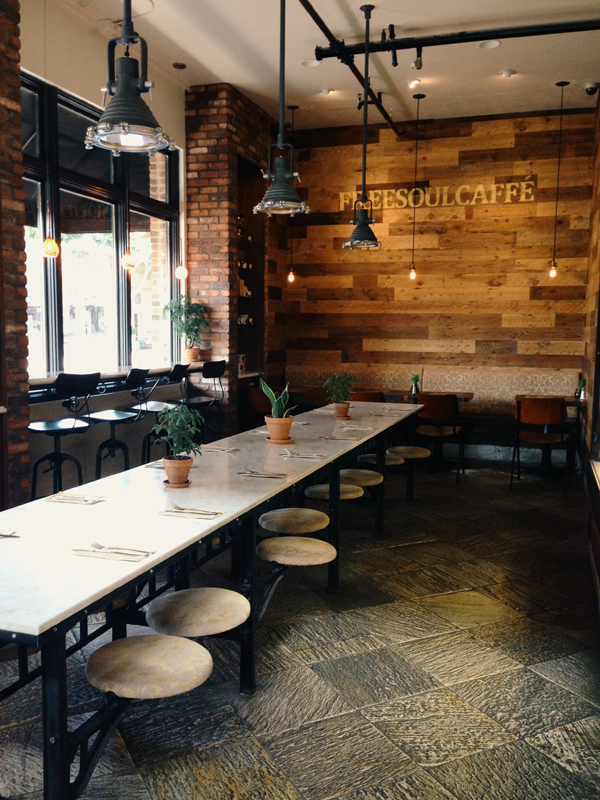
Now Tustin is all grown up. The donut shop I worked at is still standing. There’s an Historic District, a few square blocks of “Old” Tustin.” That’s where you’ll find Freesoulcaffe, an all vegan Cafe. All Vegan. From the pastries to the latte’s, to the soups and dressings, no animals are harmed in carrying out the menu. This is their mission statement: “Freesoulcaffe was established to provide wholesome, sustainable, fine coffees, teas and foods for an alternative, compassionate way of life.”

Freesoulcaffe has a beautiful picture window that faces out to the street, a patio nestled in the back, which we were unable to take advantage of due to the weather, (reminder to self, next trip to CA, make sure it’s warm and sunny) and a simple elegant decor inside, with a very roomy Barrista serving counter. They do serve lots of tea and coffee so the roominess makes sense. I couldn’t get a glimpse of the kitchen, nor could I even locate it. My Chef’s sense having been dulled by the forces of nature.

It was rainy and very cold when we ventured out to dine at this small, cozy and intimate cafe. But venture we did and were well-rewarded with fresh, well seasoned, and pretty food. The Partner ordered the Smoked Tomato Tortilla Soup, which came with the traditional garnish of avocado, fresh tomato. and cilantro. The smokiness of the tomatoes made the trip in the rain worth it. I had the Vegan Chicken Salad. I failed to write down the details and description, and so cannot give an accurate account. I do know that it was very good, and satisfied my salad craving of the day. I’m a fan of Vinaigrettes, and love to create them myself, and when I come across a nice house-made dressing, I fall into a little bit of chef heaven.

If you are ever in the vicinity, check this cafe out, but do it during the day, or when it’s not raining, so you can sit on the patio and enjoy the view. And if you don’t believe me here’s another opinon from Quarry Girl.

Share

Curry Leaves Found In Phoenix

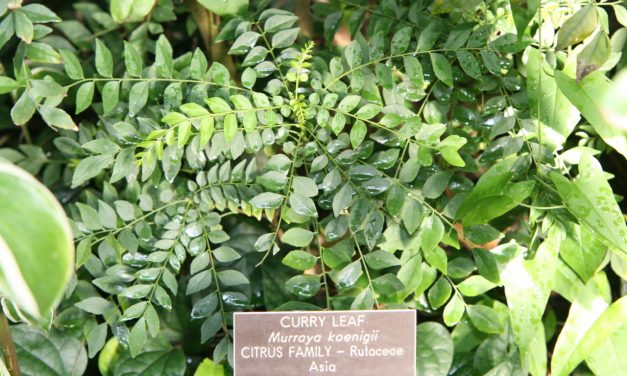
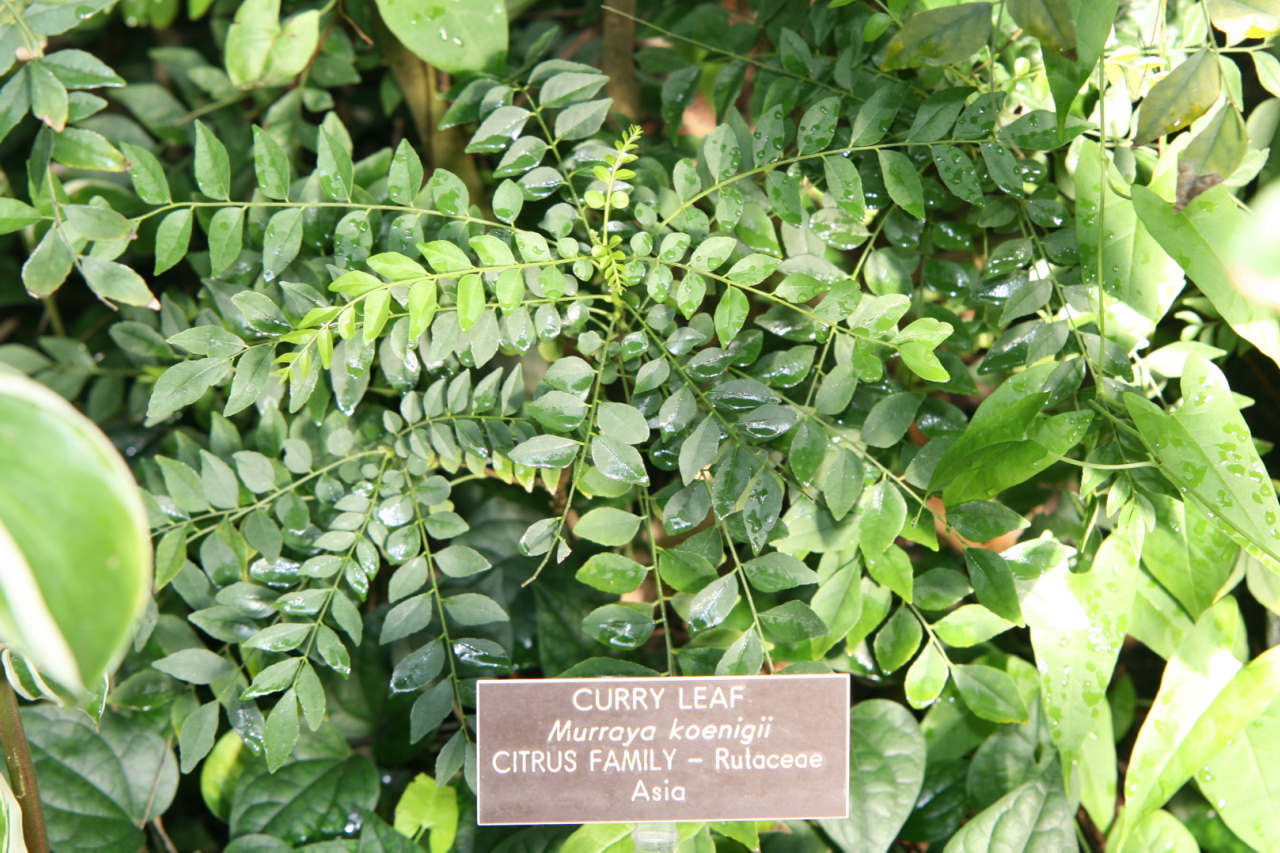
I’ve been all over the place. Local markets, Asian Markets, big stores, small stores, farmers markets. I’m looking for a local source for curry leaves and I can’t seem to find one. I was especially frustrated when I was told that they are an “oddity” and “exotic”.

Yes, the curry plant (Murraya Koenigii) is indigenous to India, and an essential ingredient in South Indian cooking . Why would I think any market in Phoenix would have them? Well, because I have found them here before. And we have a population of Indians, and a great South Indian Restaurant, Udapi Cafe. Wouldn’t there be a good local source for curry leaves?

I was able to get some information from one of the vendors at my favorite farmers market. She directed me to Tropico Mango. I emailed the nursery about obtaining a plant. I received a response in less than an hour. “Yes, we have them.” So this next week I am going out and purchasing a curry plant/tree. Then I will have my own source of this very important ingredient in South Indian cooking, the cuisine I am currently exploring.

I am glad that the search is over. I’m a bit tired from spending time and gas chasing all over town for an elusive and rare ingredient that is so important in South India, but not here in the Great Southwest.

Share

No More Junk Food

I just started an extreme change in diet, and am looking towards weight loss. I’m 165 lbs, and have a 39.5 inch waist. I had started a juice diet back in the beginning of February, but when my cat got really sick, I became stressed, and started eating junk at work again, cheese, pastries, cookies, lots of bread.* When I went to the doctor and stepped on the scale, I had gained everything back that I lost over the few weeks I was juicing.


Don’t be fooled. Juicing is a lot of work. Cutting raw vegetables isn’t. For every meal I have to juice carrots and apples. I have to clean and chop the vegetables I am going to eat. I have to think about the process of putting together the food. I have to plan my juice menu for work, and take it with me, so my hands don’t get stuck in the wrong food. And here’s the best part, I need to keep a food log of what I eat. That includes the junk food.

We all know that it is better to eat organic, but there is not 100% proof that the veggies and fruits I am eating are organic. There is a debate on whether organic farming is less or more harmful than conventional farming. You can read this article for a quality view on why. I find it hard to justify purchasing the more expensive organic produce when I can’t be sure of the farming techniques involved.

The household budget has been such that I can’t afford the organic produce. We are working on changing that. But for the next few months it will still be tight. Yes, I get to the farmers markets when I can, and their prices are reasonable in my neck of the woods, but frequently I work during the hours they operate, so I miss that weekly trip.

I am working on becoming a conscientious eater. I have to think about what I am putting into my body. Sometimes at work, I don’t do this, and my hand gets stuck in the cheese, and the cheese goes in my mouth. There’s a pastry cart, and the fattening sugar and egg filled concoction goes into my mouth. And then I torture myself for eating these things. 1) they are not vegan, 2) they are so very bad for me, 3) that is why I have weight gain.

Changing the way we eat is hard. As a species we like comfort food, and we are wired with a vicious sweet tooth. There is a feeling of entitlement to the foods we eat in the United States. The meats, the pre-packaged foods, all the produce that is chopped and sliced for us sitting on the market shelf. Getting food is easy, we don’t have to work at it. So of course, we don’t think about what goes into the body, just that I can have THAT if I want.

This is what I have noticed on day 3 of changing my eating habits. Eating raw veggies gives me energy and makes me feel good. When I eat pastries, I get the boost from the sugar, but then start feeling sluggish a half hour later. I’m finding that processed white flour is not good for my body, not any more. So, when I go to put something in my mouth at work, it needs to be veggies. Raw veggies. Stuff that makes me feel good, and doesn’t cause guilt later on.

Becoming a conscientious eater is like learning to walk again. Think, then eat. Be grateful for the food. Find the joy in what you are eating. Don’t just slam down the big mac and fries and call it a day. Look at what is really going into your body, and if you want to make a change, make it, slowly. Give yourself time, and if you slip, like I did, go back to the beginning. I am guilty of sitting around the house devouring a bag of potato chips, and not even thinking about it. So, I know I need to change.

These are the first few steps for me, hopefully I can stay on this path, and really change my habits.

*Please don’t let it surprise you that I am not 100% Vegan. I am a working chef in a large resort. My goal is to be 100% vegan in the next year.

Share

Soy Chorizo, Finally!

It took five minutes, a 1 lb package of tofu, paprika, chili powder, and a food processor.

We buy 2-3 1 lb blocks of tofu a week. We buy a 1 lb package of soyrizo from Trader Joe’s every week. The soyrizo costs $3.49, a 1 lb package of tofu $1.99. So, why I am I spending double the money on something I can make? First excuse: I had no paprika. I don’t cook with it. Never had a need. Once about three years ago I used smoked paprika in quinoa, that was really good. Second excuse? Laziness. Pure and simple. It’s easier to grab it off the shelf than to make it myself.

Like I said, five minutes. OK, maybe 10 with clean-up time. A web search for vegan chorizo generates a ton of talk about the kinds of chorizo you can buy at the local market, not how to make it, or if there is a recipe it uses TVP, and I have nightmares from my childhood about TVP. (That’s a story for another post).

Here’s the recipe.  Feel free to modify it however you like, and, please, if you make it, leave me a comment about how it turns out.

Soy Chorizo

Ingredients

  • 1 lb firm tofu, cubed
  • 2 tbsp paprika
  • 2 tbsp red chili powder
  • 2 tsp cumin
  • 2 tsp coriander seed
  • 4-5 cloves garlic, peeled
  • 2-3 shallots, peeled and chopped
  • 1 1/2 tsp salt
  • 1/3 cup apple cider vinegar

Process

Add all the ingredients but the vinegar in a food processor. Mix with the metal blade until the tofu starts to form a ball. Remove and place into a work bowl (I use stainless steel bowls). Add the vinegar, working it into the ball of tofu.

Wrap tightly in plastic and store in refrigerator for a couple of days.

Remove and form patties approximately 1 inch in diameter. Wrap and freeze until needed. Use in any recipe that calls for chorizo. Alternatively, cook in a frying pan with a little oil, and eat on the side with Tofu Scramble, pancakes, or other breakfast food.

Schema/Recipe SEO Data Markup by ZipList Recipe Plugin
http://www.kitchenshaman.com/soy-chorizo-finally/

Share

Culinary Sleuth

In order to bring you the Food knowledge and History section of this blog, I have had to become part food anthropologist, part researcher, and part historian. Not to mention a bit of a botanist to keep track of all the genus of plant life I am reading about.

It boils down to this: the world is only so big, there’s only so many plant foods humans can consume without being poisoned. However, at least in America, our palates were watered down, and left bland, until the Food Revolution of the late 1980′s through the mid-1990′s. Food was brought back to life by the discovery that cinnamon, nutmeg, cloves, and allspice weren’t just for desserts. We found out there’s more grain than just wheat, and there is more fruit out there besides bananas and oranges.

I grew up on a typical bland American diet, devoid of flavoring except for the dried herbs in my mom’s cupboard. My dad, who got to travel once a year with the Air Force would bring back discovered foods from other places; coconuts, papaya, starfruit. And he would tell us about them, and show me how to eat them, or cook with them.  I always got excited when he came home from these trips, it meant new foods.

The pursuit of understanding food, and where it came from stems from an underlying need to know. I spent years finding out about television. Why we make it, why we watch it. Now I am spending time learning about food, where it comes from, why we eat what we eat. I find myself traveling all over the internet just to bring you bits of information about different food, and different food products. And I’m reading books like Food Plants of the World: An Illustrated Guide
just to find out more about the food we eat, or the food we ignore.

What is the role of food in other cuisines, countries? How did it get there. Why do we like some food, and not others? I’m reading books that attempt to discover the answers to some of these questions. And the knowledge I gain will be transferred here, to this blog, so that we can discover together what breadfruit or baobab is.

It is a time consuming chore that I love to indulge in. Sleuthing around, looking for books or information that can be useful. Because, you know there are thousands of books out there about food. Cookbooks, food knowledge books, memoirs, and novels with food at the center. Which ones should you read, which ones actually bring the information together to inform and teach you about food and cooking? Hopefully the recommendations I find and make will help you make a better decision about what to cook, and what to eat.

Share

Is Gluten-free, Dairy-free Pastry Worth It?

The First in a series of Restaurant Reviews on my trip to Orange County, and Los Angeles, California

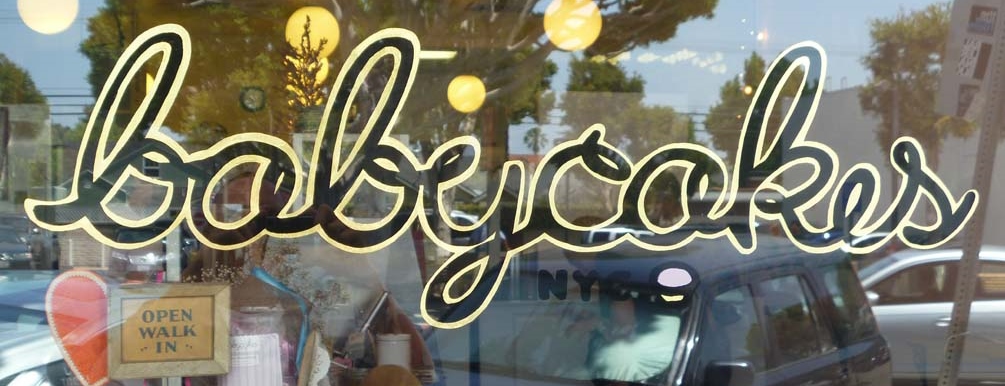
A Trip to Babycakes Bakery

Los Angeles, Downtown, Sunday, mid-morning. The streets are crowded, and we are driving in circles, looking for a parking place. Around, and around. I’m seriously getting dizzy. I didn’t know there would be that much foot traffic in Downtown L.A. on a Sunday morning, blocking my ability to make a right turn before the light changes and the oncoming traffic starts. Half an hour of this.

Waiting for lights, waiting for cars. I wonder, is a gluten-free, dairy-free pastry worth this much trouble? Apparently I used my out-loud voice without realizing it. The partner glares at me. “Yes.” She growls.

I continue, in circles. Until, two blocks down and one block over, there is a parking space. We are in the Garment district. I know so because the signs say so. It’s  a working class section of town, thus all the foot traffic.

We park and lock, feed the meter, and hike it up to Baby Cakes. Once upon a time just a New York City operation, Baby Cakes has opened a bakery in LA. A small, tiny, 32 by 54 square foot bakery. We walk in and look around at the one table with two chairs, an ordering counter, a cash register, three display cases, and a window with shutters that are opened, facing into the “bakery.” And there’s a board to hang up cards and other miscellaneous flyers and event information.

The bakery consists of two ovens, a counter for processing dough and cake-like substances, and a mixer. My trained culinary eye takes it all in. I look down the hallway and see stacks of flour and other chemist-like products that bakers dare use to coax dough and batter into lovely, yummy sweet-tasting food.

The smell is well, heavenly. It’s a bakers haven. The one girl who takes our order multiplies into three as we sit eating our agave-sweetened goodies. The girls stand at the “Icing” station, icing cookies, and idly chatting about their lives, terribly unaware that two total strangers are listening in. When you work in an environment like Baby Cakes, who cares what strangers think. The bakers change shifts. The short but slender, long-haired boy turns into an older, smiling woman with slightly greying hair.

I’ll have to say that Baby Cakes wasn’t quite as small as the Wine bar next door, which was closed until 5 p.m., and looked to be half the size of the bakery.

Was it worth the trip into Downtown L.A. for those wheat free, dairy free pastries? You betcha. How ever the originators of Babycakes figured out the chemistry behind the cupcake, they are geniuses. It was worth it just to see the frosting smile on the Partner’s face. Is it worth another 7 hour drive just to get that smile again. Oh, hell yes.

Now, can we have a Babycakes in Phoenix, Arizona, please.

Share

April Reading List

Here’s the culinary reading list so far this month…

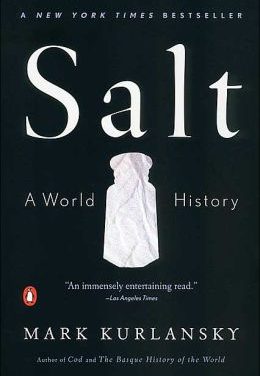
Salt: A World History: I know, we’ve seen this one before, but I had to send it back to the library before I was done reading. This time I intend to finish it. Salt has had a huge impact on our world, and how it shaped world history.

Food Plants of the World: An Illustrated Guide: A comprehensive and thorough documentation of the approximately 350 foods that we humans consume.

Seeds of Change: Five Plants That Transformed Mankind: There is a newer edition of this book, Seeds of Change: Six Plants That Transformed Mankind. Henry Hobhouse added cocoa to quinine, sugar, tea, cotton and the potato as foods that impacted history. I’m wondering why corn is not in there?
I just finished with Feasting on Asphalt: The River Run by Alton Brown. This is a written diary of the series by the same name, produced for the Food Network. I found it useful for ideas, but not nearly as entertaining as the show itself.

Share

Three Faces of the Annatto Seed

Annatto, or, in spanish, Achiote,  is a well-loved spice in Central and South American cuisines. Unlike some of the other herbs and spices I’ve researched, there are many recipes, descriptions and uses listed for annatto seeds, achiote paste, and annatto oil. The trick to using this spice is figuring out what you want to do with it.

Annatto (achiote in Spanish)  hails from the Caribbean, Central America, and the warmer parts of South America. Along with chocolate and tomatoes, Annatto traveled back to the Old World with the Spanish Conquistadors and found a place in India and other South Asian countries, with climates that allow the plant to thrive.

In its various native languages it is called achiotl,  aploppas, and urucu. It has an earthy, dusky flavor that can add depth and richness to dishes.

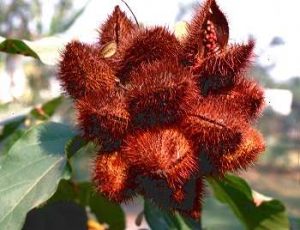
When ripened, the seeds of the plant are ground and mixed into a paste for marinating meats. annatto seedThe fresh seeds are used directly in sauces and stews. The oil can be extracted and used as both a culinary flavoring and coloring. Annatto also serves as a good substitute for the more expensive spice Saffron, providing a similar color, and a similar,  though not identical, flavor.

Dye created from the seeds is used as body paint and lipstick by the tribes of Central America, which is why the plant is sometimes called the Lipstick Tree. (Also, when the pods open, they kind of look like lips).

The oil extracted from Annatto is used to color cheese, popcorn, margarine, and other foods. However, it has recently been replaced by a synthetic version of beta carotene, that is cheaper and easier to make.

You can find achiote paste in Latin or Mexican markets, already mixed with other spices. All you have to do is dissolve it to consistancy in water, and then marinade what it is you want to cook. The seeds can also be found in specialty markets. Even though it may take a little work to track them down, the unique flavor added by annatto makes it worth the effort.

Here’s a simple recipe for Achiote Paste.Achiote paste ingredients

  • 1/4 cup annatto seeds
    1 tablespoon coriander seeds
    1 tablespoon oregano
    1 teaspoon cumin seeds
    1 teaspoon black peppercorns
    2 whole cloves
    1 teaspoon salt
    5 cloves of garlic, peeled
    1/2 cup bitter orange juice (Seville) or 1/3 cup white vinegar

Enjoy exploring.

Share