Monthly Archives: May 2011

Stevia and the Sugar Debate
There is a debate running about sugar and alternative sweeteners. The general agreement is that refined white sugar is unhealthy for our bodies. It contains empty calories and active agents that rot our teeth and help increase the rate of diabetes in our population. Yet we continue to purchase and consume sugar in mass quantities. The artificial sweeteners aren’t healthy for you either, causing side effects like cancer.

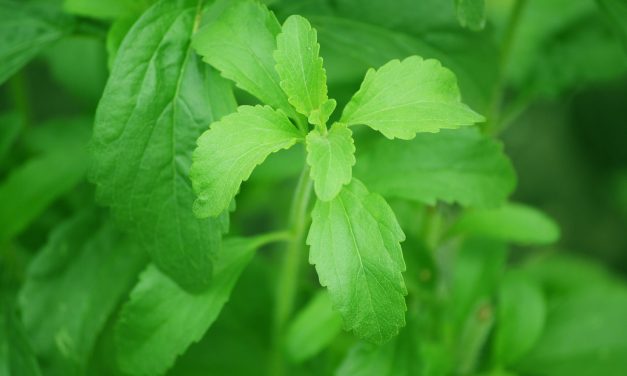
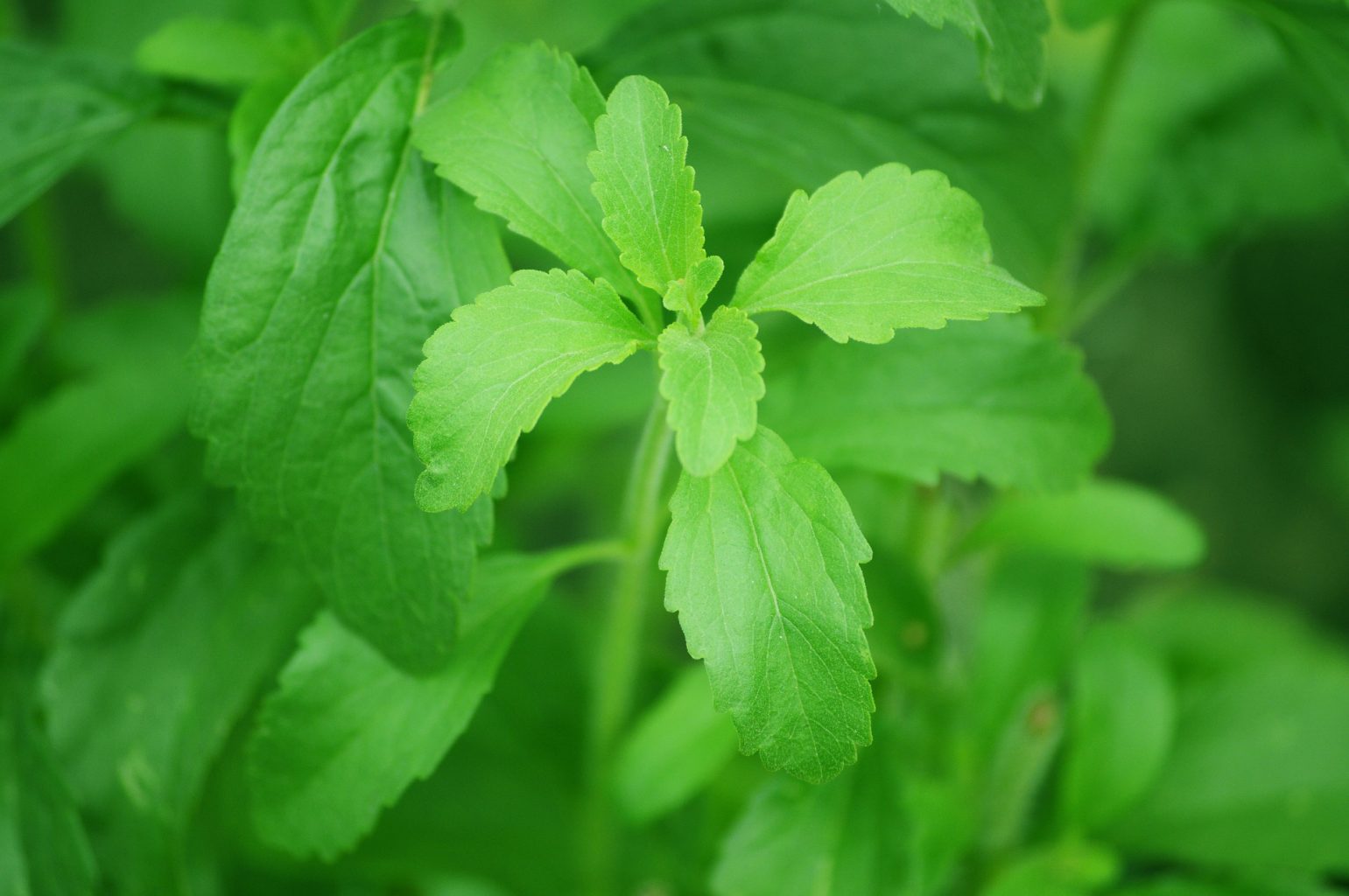
Along comes stevia, a plant from South America that took thirty some odd years to appear in American grocery stores. So what is the big buzz about stevia? It is a plant. You can use it much like curry leaves, right from the plant itself. It takes less amount of stevia than regular sugar to sweeten products. You can purchase stevia from your local market, it comes in the form of white powder, packaged in a box.


Like most “natural” products, stevia is subjected to a refining process. Unfortunately, I could not find out exactly how stevia is processed. Unlike sugar, where I found a chart that shows you the refining process of cane or beet sugar, no where could I find the exact process that this plant is subjected to in order to make the fine white powder (unusual in this information age). When I do I’ll make sure I share on this blog. Hopefully it does not involve the same kind of process beet and cane sugar go through.

As a vegan-minded chef, it took me some time to understand why refined sugar is on the list of animal by-products. It comes from a plant, beet or cane. It is natural. Why would it be listed? Then I did some research, and found out that sugar is subjected to an intense refining process. Once sugar is extracted from the plant, then the dried crystals are bleached through cow bones. This is a process that has been going on for a couple thousand years, and the reason vegans do not consume commercial sugar.

I do recommend trying this relative new-comer to the sweetener shelf, and see how you like it. I found some recipes for you to try. It does take smaller amount of stevia to sweeten other food.  And so far has proven to have zero side affects on the human body. As always, experiment, and find out what works for you. Let us know how you feel about stevia by using the comment form below.

Share
the Kitchen Shaman

The Fear and Passion of Cooking

We just finished watching the movie Julie/Julia again, and the “Making of” on the DVD. I saw the movie when it came out in 2009, but didn’t think to read the book. I read the book in December, and found it funny, interesting, and a great story about learning how to cook. So I had to watch the movie again.
During the “Making of” part on the DVD, they mentioned how Julia Child was a fearless human being, and that cooking makes you fearless. The discipline demands it from you.

Last month, I realized that my fear was gone. Not that healthy fear that keeps me away from scary crack dens, and out of a stranger’s car. But the kind of fear I carried around for years because of the abuse I suffered as a child, and just the crap the world feeds us through the media, and other outlets of information. The fear that crawled around inside my skin and jumped out and attacked me at the most inopportune times. This paralyzing, numbing fear is gone.

When they said that cooking makes you fearless, I teared up, went in the kitchen and cried a little. I remember thinking the other day that cooking took away my fear, and there, someone said it on the making of a movie.

Cooking changes you. It can transform you. You do not belong to yourself. You belong to the food you make, the recipes you discover, the flavor combinations. You belong to the people you cook for, whether they are nameless and faceless, or your intimate partners and family. You are what you discover in cookbooks and recipes online. You belong to the process of discovering new tastes. And you become something more than what you were before you cooked  (if there was such a time).

Maybe this doesn’t happen to every cook. Maybe not to every chef. But the good ones, the ones I admire, the chefs and cooks breaking their hearts on their knives and saute pans, the ones that lost fear because of food, these are my heros.

Cooks wieild knives and fire. We show up day after day to feed the masses, crunching out order after order, cooking meal after meal for family and friends. We create food for banquets, party food for the holidays and football celebrations. For almost any and every “special” occasion, some cook somewhere in the world makes food for that day, that event, that occasion. It takes guts to give up your holidays and cook all the food that is required for other people. And actually wanting to create the food people eat on those days. Stop and think about it. Who made those chocolates for your Valentine’s Day Sweetheart. Who made that birthday cake, or cooked those chicken wings, or whipped together that Christmas Dinner. Did you stop to thank them? They are the Fearless, cooking shift after shift, meal after meal, day after day, so you don’t have to.

This is how I lost my fear. I lost it in my knife handle becoming an extension of my hand. I lost it in the saute pan leaping fire into my face and singeing my eyebrows. I lost it on the char-broiler with the fat from that steak dripping off and flaming up. I lost it in the plate I created for the photograph on this blog. I gave my fear up to the food I create and it became Passion.

Share

How to Make Simple Syrup

This syrup is a great base for making lemonade, or any other sweetened home-made drink. I’m going to try it out with the Ginger-beer recipe I found over at Trinigourmet.com.

Simple Syrup

  • 2 cups vegan sugar
  • 4 cups water

Dissolve sugar into the water, and place in a heavy-bottomed sauce pan. This is going to cook for some time. Bring to a boil and then lower to a medium low heat. Let cook, stirring occasionally, until the mixture starts to become thick. Depending on the intensity you wish to have in your drinks, you can make it really thick, or keep it thin. If you over-cook it, just add some water to loosen it up.

Simple syrup can keep for a long time. So don’t worry. If you want to make a big batch (like I’m going to for the ginger beer) use a bigger stock pot. Just remember to keep a close eye on the stuff.

This goes great with Fresh-made Lemonade.

Share

5 Quick Tips on How to Handle Chilis

We all know that chilis are hot. Some more than others. There are precautions you can take when handling chilis that will make it safer and easier. If you’ve wanted to try a habanero, but did not want to risk burning yourself, here’s what you do.

  1. Wear gloves. This will keep the active ingredient Capsicum off your hands, and on your knife
  2. Never, ever touch your eyes or other sensitive parts of your body if you handle chilis without gloves.
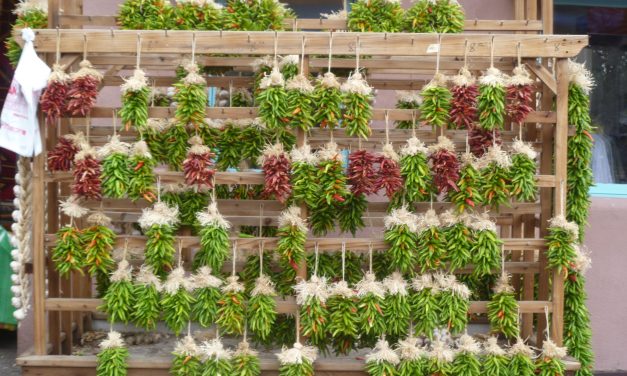
  3. Take out the seed core of the chili. The seeds are the hottest part of the chili, and unless you want to burn the diner’s mouth, I suggest this method.
  4. Wash all utensils and cutting boards thoroughly after handling chilis.
  5. Thoroughly wash your hands after handling chilis even if you wear gloves. Believe me, you’ll be glad you did.

That’s it. Follow these few tips, and you are well on your way to being “macho” in your house.

Share

Watermelon as Gazpacho

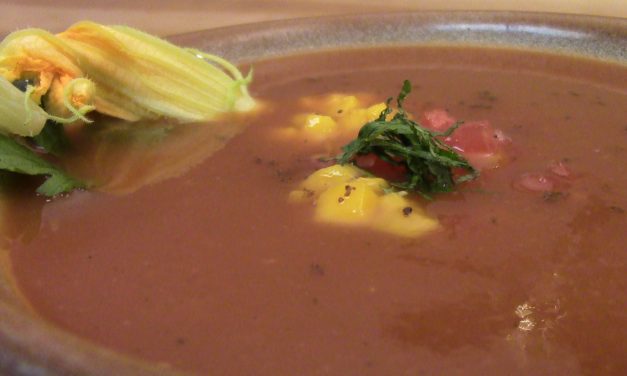
Summer is almost here, and that means cold soups, gazpachos, and watermelon, lots of watermelon. And watermelon can be the base for a great raw soup. I found this version at The Sunny Raw Kitchen, and with a few tweaks, made it fabulous. Be warned, it makes a lot of soup, (6 cups) and the habanero chili is hot, so play with caution, use gloves if you are sensitive to capsacuim.

Watermelon Soup

  • 3 cups watermelon (use seedless if you don’t like taking seeds out)
  • 1 habanero chili
  • 1 mango, diced (can be large diced)
  • 1/2 tsp cardamom seed
  • 1 tsp agave syrup
  • 1 tbsp cilantro, finely chopped
  • finely dieced watermelon and mango pieces for garnish

Assemble all ingredients. Remove cardamom seeds from their shells. Place all ingredients except for cilantro and agave in blender and puree. Transfer to a bowl, and add agave and cilantro. Garnish with finely diced mango and watermelon pieces. Serve on a hot day with fresh-made lemonade.

Just a note: To make this a truly raw soup, omit the agave syrup. Melon and mango are sweet enough on their own.

Traditional Gazpacho is defined as a cold Spanish tomato-based raw soup. Modern variations include Avocado, Cucumber, Parsley, Watermelon, grapes, meat-stock, seafood, as well as other ingredients. If there are those who want to argue that Watermelon cannot be gazpacho, I beg to differ. If the definition of gazpacho is cold and raw, then this Soup is Gazpacho.


Share

Changing The Way We Eat: Food Revolution

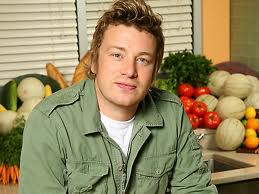
Chef Jamie OliverChef Jamie Oliver is an engaging and entertaining chef. He earned this reputation on the television series The Naked Chef broadcast by the BBC. His boyish good looks and charm won over audiences around Britain. And then he came to America.

Chef Jamie is on a mission. Changing the way kids eat in schools. In the television series “Jamie’s School Dinners” he uncovered the appalling quality of food served in the public school lunch rooms across Britain. With the help of petitions and activism, Chef Oliver helped to start the transformation of the way kids eat in school. And he’s brought that fight to America.

“Food Revolution” is a new series that focuses on the challenge of addressing the problems of obesity, heart disease and diabetes in the United States-where for the first time a generation of children are not expected to live as long as their parents. He invites viewers to take a stand and change the way we Americans eat.

Not an easy task when talking about a public school system that states french fries are an optional vegetable selection. And where milk that contains sugar is served. We are talking about changing the way a group of people eat who order fast food at drive-ins, take it to work and consume the meal in under five minutes. A population of folks who, when I talk to them, say that they really ought to eat more vegetables, and then shudder at the thought. A class of folks who feel that the food we can obtain is our right and privilege, even though that food (processed) is killing us (not yet proven).

Jamie Oliver is on to a good thing, and he can do it with your help. Sign the petition and get involved. If you care about the way your children eat in public schools, and the state of Food in the United States, help change the way we look at food, the way we buy our food, and what we eat. It’s what the Kitchen Shaman is all about. Fresh, great food, that not only tastes good, but makes you feel good too.

Share

Weekday Vegetarian as an Option

This is a guest post written by my Partner, D’Marie.

I have been a vegetarian for a long time, approaching twenty years now. I have been a full on vegan for three or four and wheat free for two.  This has been a long process, not an overnight change.

Even the initial decision to become a vegetarian, back when I was in college, was a gradual one.  I decided to slowly weed out different types of meat from my diet so that I could, one day, become a full vegetarian. At that point I couldn’t imagine becoming vegan.  And, because the idea of leaving behind meat was such a scary one, I was even slow on that count.  I remember explaining to friends that I was allowing myself to eat red meat only two days a week at first and poultry the rest of the week.

The idea presented in the following TED talk by Graham Hill is very similar.  Instead of thinking of vegetarian or vegan diets as a binary choice — all or nothing — find a way to make it about moderation and slowly changing habits.

Hill has since released a digital book Weekday Vegetarian: Finally, a Palatable Solution (Kindle Single), that outlines the plan and includes recipes and tips.

If all you can do is cut your meat intake by 70%, then that’s an amazing impact on your own health as well as the environment.

If you, like me, find yourself realizing at some point that you’re just done with meat, then maybe you can start to transition from dairy, eggs, and honey and become a vegan next.

Either way, you’ll be on your way to a healthy, happier, more compassionate way of living.

Share

Worth the Trip? Veggie Grill in Hollywood

The fourth in a series of  Restaurant Reviews On My Trip to Orange County, and Los Angeles, CA. The previous posts were Satisfying Soul in OCIs Gluten-Free Dairy Free Worth It, and Vegan Food Found in O.C.

Our final excursion into Southern California vegan cuisine was the Veggie Grill. We went to the one in Hollywood, on Sunset Blvd, nestled inside a large retail building that included movie theatres. Again, we had difficulty with parking, but with it being Sunday and movie theatres in Hollywood at mid-day, it made sense that parking would be an issue.

We found the restaurant. As I entered I encountered bright orange and green walls with poster frames of different kinds of vegetables. It was bright, and light. One of my main complaints about restaurants is that we turn the lights down low, provide candles, and then you, the guest, really can’t see what you are eating. Not so at the Veggie Grill, the big windows and bright colors lit everything up.

We went to the counter and placed our orders. Again with the order-at-the counter, pour- your-own-drink, and wait for the food to come with a number on the table. Since my partner was connecting with an old friend the wait wasn’t too bad. We had good conversation, and drinks.

As we were ordering, I peeked behind the cashier/order-taker into the kitchen. The Veggie Grill sports an open kitchen where you can watch the cooks make food. I saw a couple of very young, green cooks back there. Well, it was Sunday.

Then our food came. I had the Santa Fe Chickn with crispy fried chickin’, lettuce, tomato, red onion, avocado, and southwestern spiced vegan mayo. And because I love sweet potato fries, I got those, it was the Special that day. The partner had the Papa’s Portobello-Kale Style. It came with a grilled portobello mushroom, chopped tomato, basil & garlic, pomodoro sauce, caramelized onions, pesto, LTO, and chipolte ranch. And instead of a bun, she got it on Kale. Nice touch. We shared a bowl of the the Bean me up Chili, a combination of red & white beans, garnished with soy cream and chopped green and red onion.

Having recently lived in Santa Fe, anything by that name should be spicy and hot. What I got was a medicore flavored sandwich, and vegan mayo splattered with a little chili spice. The Chili was good, warm and comforting, like chili should be. I was impressed with the overall presentation of the food, but not the flavors. I’m used to big and bold (to quote the Food Network), not wimpy and whiny. The mushroom was flavored well, and I believe I appropriated the chipolte ranch for my sweet potato fries. Overall Papa’s was good, but still nothing to get excited over.

It’s possible that we were there on an off day. Or that the green cooks weren’t sure about how much flavor to add to the food. It was a flat end to a day that involved driving in circles in Downtown L.A. (see Babycakes), and having a great drive down Sunset Blvd on a sunny day.

Next time I’m in So. Cal, I will give the Veggie Grill another try. I know that there are Californians who revere this place. Still compared to Native Foods, and Freesoulcaffe, it felt like the Burger King of So. Cal Vegan Cuisine.

Share

This Week’s Experiment: Pickles

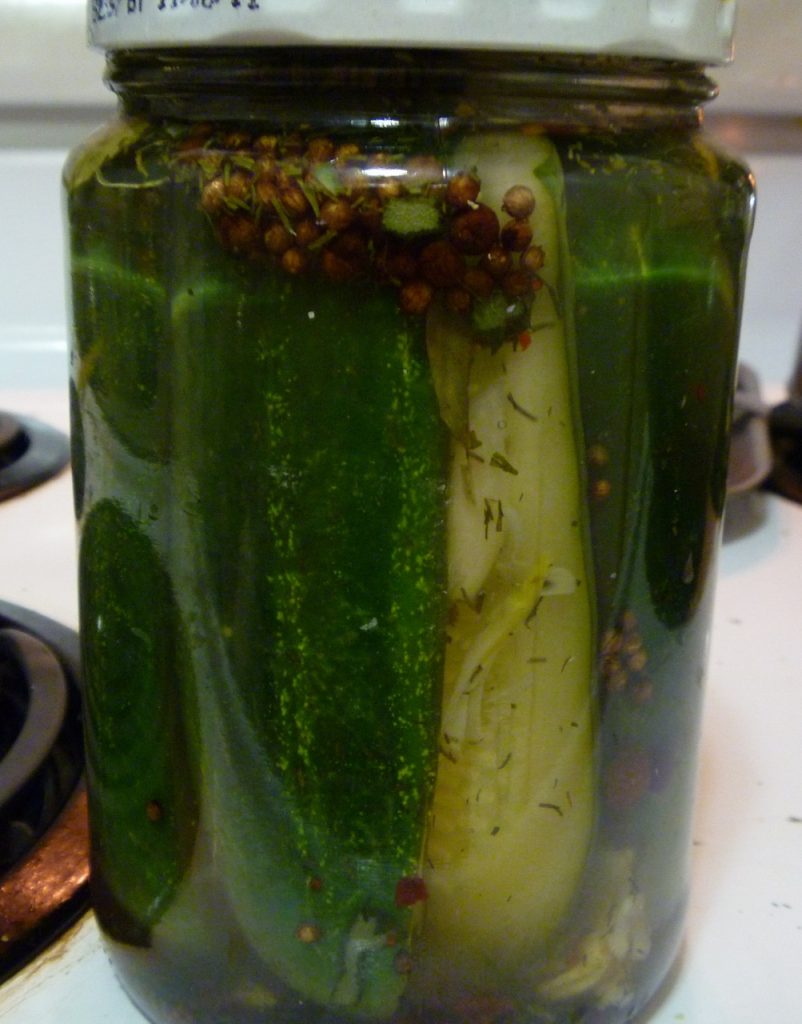
It is Springtime and that means pickling cucumbers are in abundance at the markets. Lots and lots of pickling cucumbers, on sale. Everywhere. Lately, I’ve been contemplating pickling, but I don’t own a canning system. You know, the pot, the rack, the tongs. Hopefully this is something that might be in my future, but for now, it’s about figuring out how to make pickles without all the gear.

An online search revealed a breakdown of a Kosher Dill Pickle recipe over at David Lebovitz’ blog It is his recap on Arthur Scharwtz’s Homemade Kosher Pickles. Looked easy enough, and only involves fermenting, not canning.

I got myself to the market, and since this is an experiment, I didn’t go crazy and buy like 10 pounds of cucumbers. I neither have the room, nor the patience to pickle that many cucumbers. I bought 10 pickling cucumbers, and the required fresh dill, and a few of the missing pickling spices. (I have a well-stocked pantry, it wasn’t that much). Then proceeded with the experiment.

Most pickling recipes call for many pounds of cucumbers. This easy to follow recipe allows you to experiment like I did, and enjoy tasty, yummy pickles with minimal effort. Of course, the hardest part is the waiting. I’ve included a breakdown of the Pickling Spices Recipe, using a smaller amount than in the original.

Tools

  • Big pot
  • Tongs
  • 3 canning jars (I reused my saved pickle jars)
  • Mixing bowl
  • Measuring spoons
  • Cheesecloth or muslin

For the Pickles

  • 10 pickling cucumbers
  • Pickling spices
  • Coarse or Kosher salt
  • Water
  • Fresh Dill
  • Whole garlic cloves slightly crushed

Pickling Spices

  • 3 tbsp mustard seed
  • 3 tbsp whole allspice
  • 3 tsp coriander
  • 1 1/2 tsp ground ginger
  • 1 1/2 tsp red pepper flakes (more for hotter pickles)
  • 1 1/2 cinnamon sticks

Process:

  1. Rinse and dry the cucumbers. Bring half a pot of water to a boil, then simmer. Using tongs, dip each jar and lid into the water. This sanitizes the jars.
  2. Empty the water and refill with 2 quarts of water and 3 tbsp of kosher salt. You want coarse or kosher salt because it is pure salt, not mixed with anti-caking agents or iodine. Bring to a boil.
  3. While water is coming to a boil, divide the pickling spices up between the jars. Add several cloves of garlic, and pack the cucumbers tightly into the jars. Be careful, if you try to cram the cucumbers, you might break the glass. Add a few sprigs of dill to each jar.
  4. Carefully pour the hot, salted water into each jar, filling it close to the top. You want to leave a little head room.
  5. Cover with cheesecloth secured with rubber bands, and store in a cool dry place, ideally below 75 degrees. (I didn’t have cheese cloth, so I used muslin, fingers crossed).
  6. Wait 3-6 days.Then try one. Lebovitz says a jar of his pickles were ready in 48 hours. The longer they ferment the more sour they will become.

I’ll let you know next week how these pickles come out. I’m excited, and can’t wait to try them.


Share

Pickling Spice Recipe

This recipe is for making Dill Pickles. I’ve scaled down the amounts, because I believe there are people like me who only want to make small quantities of certain food items, not gallons.

Follow this and combine it with Arthur Schwartz’s Homemade Kosher Dill Pickles, brought to you by David Lebovitz, and you’ll have your kitchen smelling like a pickle in 5 minutes, tops.

Pickling Spices

Ingredients

  • 3 tbsp mustard seed
  • 3 tbsp whole allspice
  • 3 tsp coriander
  • 11/2 tsp ground ginger
  • 1 1/2 tsp red pepper flakes (more for hotter pickles)
  • 1 1/2 cinnamon sticks

Process:

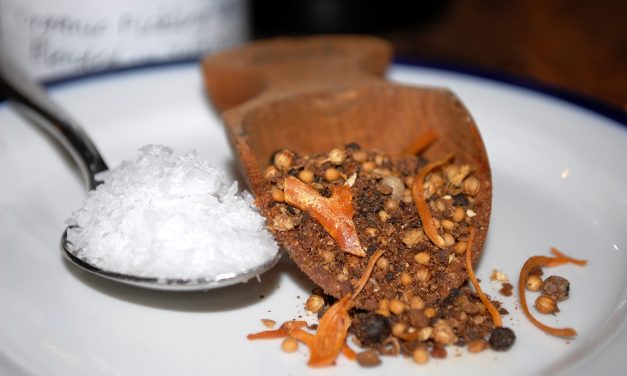
Combine all ingredients and mix well. Divide between the three jars in This Week’s Experiment: Pickles, and follow the rest of the recipe. And enjoy those pickles with BBQ Tofu, or Portabello Mushroom Burgers.


Share