Category Archives: Perspective

The Collective Culinary Journey

I love reading about food — history, memoirs, and yes, recipe books. I read some blogs; admittedly, I need to read more of them. What I’ve discovered is that I enjoy the collective story of the culinary journey.

I recently came across the blog Poor Man’s Feast, written by Elissa Altman, and the 2012  winner of the James Beard individual food blog award. Her writing is everything a food writer should be, and the blog is an amazing homage to memory, food, and her mother.

The Tenth Muse by Judith JonesRight now, I’m currently digesting The Tenth Muse: My Life in Food, by Judith Jones. As an Editor at Knopf Publishing Co. she is responsible for bringing us “Mastering the Art of French Cooking by Julia Child, and Madhur Jaffrey, the Indian actress turned cook. The stories in the Tenth Muse are rich in American culinary history and rife with food memories. Sometimes I wish I’d had a young adulthood like that, taking notes on what and where I feasted. Jones brings into startling focus the recipes she tested for the cookbooks she edited as well as the joys of eating a simple meal.

One other current endeavor: I am finally reading Alice Waters, namely her 2007 food philosophy book The Art of Simple Food: Notes, Lessons, and Recipes from a Delicious Revolution. In this book Waters covers cooking equipment, pantry necessities, and types of food as a foundation before presenting the actual recipes. By starting with the basics, she helps the new cook feel more secure as they try new techniques. I find her readable, and likeable — and I haven’t even gotten to the recipes yet! Waters gives us a clear direction on her philosophy about cooking; fresh, seasonal, local. And yes, it provides us with yet another piece of the collective culinary journey.

I can’t read every cookbook out there — I don’t even have time to read all the ones I check out from the library — and some of them I give up part way through. Either they are too dense or the material isn’t as interesting as I thought it would be. Reading about cooking, and the way people write about food helps me have a better understanding of my personal culinary journey. Not culinary perfection, but a balance between the simple and the complex.

Share

Sometimes, All You Need is Comfort Food

Portabella Dinner

I haven’t been cooking much at home, which is why there haven’t been many recipes posted on this blog. I have been taking lots of photographs of different food. Food that I’ve cooked, and just random shots of produce. I’ve been posting those pictures over at Facebook.

But the other day I was off work and we were shopping. As we were discussing dinner options I spied big, fat, scrumptious looking portabella mushrooms. Then, the mini sweet peppers leaped out at me. After consulting the partner, we decided on a dinner with roasted portabella mushrooms and asparagus, mashed potatoes, and caramelized sweet peppers and onions. A meal that contains comfort food at it’s finest.

I’m getting in the habit of taking photographs, so I was able to document this plate. A few of the production pictures were off, mainly the mashed potatoes. That upset me. I really wanted to show them off.

Portabella Dinner close up

Roasting the mushrooms and asparagus are easy. It doesn’t even require a recipe. Find the biggest, best Portabellas you can. Turn the oven on to broil. Rub the mushrooms with olive oil, salt and pepper. Put onto a baking pan and roast for 8 or 10 minutes, or until the mushrooms are releasing a little of their liquid, but not all of it. You want the mushrooms to retain a meaty quality. Roast the asparagus using this same method, coat with olive oil, sprinkle with salt and pepper, and place next to mushrooms.Watch the asparagus closely while it’s in the oven, it might finish before the portabellas.

Serve with Caramalized Peppers & Onions (recipe follows), and Vegan Whipped Potatoes. Make a little sauce for the mushrooms. I made Magic Sauce, but you could make a mushroom gravy. This might possibly achieve “Umami,” or, the Fifth Flavor for this meal. Of course, I thought about this after I finished the meal, took the photographs, and delivered the plate to the very hungry Partner, who has to sit there and smell all the good things I’m cooking, and waits patiently for food to get onto the table. (I am blessed with having someone in my life who doesn’t constantly come into the kitchen, sneaking bites).

Caramalized Peppers & Onions

Caramalized Peppers & Onions

Ingredients

  • 1/2 lb Mini Sweet Peppers, julienned
  • 1 Sweet Onion, julienned
  • 5 tbsp Olive Oil
  • Salt to taste

Process

Heat up a saute pan. Add the olive oil. Let the oil get hot, then add the peppers and onions. Turn the heat down to a high simmer. Cook the peppers and onions, stirring occasionally, until they caramelize (start to turn light brown). Add the salt while the peppers and onions are cooking.

If you leave the heat on too high, the peppers will char instead of caramelize. Make sure that the heat on the stove is adjusted accordingly.

Notes

Caramelizing onions and peppers takes them past the "sweating" stage, the stage where the vegetables just turn translucent. This actually makes them turn brown. You can cook them until they achieve a deep golden brown color, or just until they start to turn. Your choice. The longer you cook them, the sweeter they will taste.

Schema/Recipe SEO Data Markup by ZipList Recipe Plugin
http://www.kitchenshaman.com/sometimes-all-you-need-is-comfort-food/


Share

Follow the Photographs, and more

Are you following the Kitchen Shaman on Facebook yet? I usually post photos of my food over there first and I always put a direct link to all blog posts so you’ll know when there’s something new to read. I also provide links to other food blogs, videos, news and information, as well as notices about local events. And that’s where I announce upcoming cooking classes and demos.

So if you haven’t yet, head on over to the Kitchen Shaman Facebook page, and hit the like button. Help spread the Magic of Cooking.

Share

New Year, New Knives


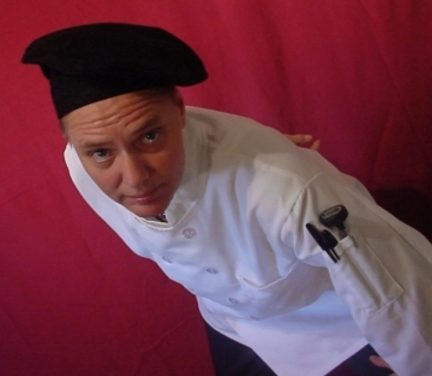
As you know, I’ve been cooking for a while, quite a long while. My standard everyday knives have been Forschners (now under Vitorinox).  They are getting up there in age. Since I moved into the land of fine dining, that means fine knife work, and that means new knives. I have secretly coveted Japanese knives, and though not trained in their usage, nor mentored by a chef who gave me permission to purchase them, I stepped out and bought new knives last week.

Japanese.Ohishi Knives with Ceramic steel

Ohishi.

Beautiful.

I bought the knives before researching. There’s a great little shop in town called the Phoenix Knife House, owned and operated by chefs. They carry some extraordinary and beautiful knives. I like to support independently owned and operated businesses. And most of my co-workers have visited them at some point since they opened.

I discussed my budget with the owner, and he proceeded to lay out about five different brands and let me handle and fondle the knives. In the meantime he reconditioned my worn and abused Forschners. I finally chose a brand, and after a telephone call to my budget advisor, purchased two Ohishi Japanese blades, a petty utility knife, and a santuko knife. I also bought a ceramic steel to keep them sharp.

I dropped the cash, and set about the rest of my day. While driving around I realized I was having a paranoid and averse reaction to purchasing these knives. What was it? I felt like I did not deserve them. Really, I’m a fraud, not a real chef. All these thoughts flamed through my brain as I bought rice and drove all the way back home. During my shower the next day, I stumbled upon a core reason: in traditional Japanese chef culture, women are excluded. They cook at home and tend the rice fields, but they do not cook on a larger, grander scale, in restaurants. This information is blazoned some where deep inside me. So not only do I think I don’t deserve the knives, I do not have a right to them, being both female and non-Japanese.

I am a quality chef. I have proven myself, quite a few times over. I’ve earned good knives.  I work in an environment where they are necessary. I have a right to these knives and I do know how to use them.

The blades I chose are made in the village Seki, at the base of Mt. Fuji. They are a 17 fold Damascus steel blade. The pattern design is called suminagashi, and is designed like ink flow on  paper. It actually shows the folds of steel in the blade. The dimples in the knives are called Tsuchime, and are hand-hammered. I chose the knives for both balance and design. Of course, I ran home, used the knives, let them bleed me before taking them to work, then I researched them. The attraction to the pattern makes sense, being a writer, artist, and chef.

New Knife in useAnd now, I am hopelessly hooked on Japanese blades. I’m looking forward to the purchase of the next two knives. I now understand why a chef will drop more money than rent on a set of these high performance blades.

I do not recommend them for the home cook. There are other, less expensive brands that will hold up to that kind of work. As a chef, these are really nice blades to use. They have great balance and weight, and perform under the rigors of fine dining prep work.

I’ve made peace with my initial reaction of being not worthy. My workload has been cut in half, and my hands are much more sure working with these blades. I certainly deserve them, and am a worthy enough chef to use them. Any fear I had has fled and gone. Now, I slice and dice, confidant of the blade in my hand. Plus, they look really cool.

The Santuko knife is also known as an Asian Chef knife, thought to have developed from the Japanese rectangular vegetable knife. The blade is thinner then a chef’s knife, and shorter. The design of the blade helps to keep food from sticking to the blade. It is designed for mincing, chopping, slicing and dicing. I’ve used mine for a variety of tasks, finely chopped shallots, julienned carrots, and slicing bread.

Share

Food Challenges to Discover

It is a New Year, and I’ve been dodging writing for quite awhile. I want to write, but life and work get in the way. I’ve been taking care of some family stuff, and working on getting a different position at the Job. It’s an important step in my culinary career.

I want to share this information I just came across. You may already know about it, but I didn’t. Check out this blog about the 100 day Real Food Challenge. Lisa Leake and her family cut out processed foods, and realized how much better they felt. And then they blogged about it and built a Challenge that any of us can take. I think it’s fabulous, and fits right in with Jaime Oliver’s Food Revolution. There’s another site out there called Eating Rules, take a look at that as well.

There are a few other folks out there doing this kind of challenge. It seems to be connected by Michael Pollan’s “In Defense of Food,” published in 2009.

I don’t think any of my readers would argue that Americans need to change the way we eat. We cook, skrunch, extract, and re-form food, and then sell it in packages and cartons to the public, with “added” nutrients, and claim it is healthy. I’ve contended for a long time that is not the way to eat. I’m a Chef, I work with whole foods, proper foods, and turn them into something that is yummy and delicious on your plate. However, they do not get stored in a freezer or can for up to two years, waiting for someone to open it up and eat it.

So these food challenges that pop up are very cool. And I like to see that some of us are starting to eat better. And step by step we can turn back from a Processed Nation to a Whole Nation . If more of us stop buying what’s pre-packaged, and buy the produce, we can send a very loud message in the form of consumer dollars to the people who make the food. We want fresh, wholesome, whole ingredients, and we want to cook our food ourselves.

And if you want to learn to cook, contact me. I am a culinary instructor.

Share

Planning ahead, stress free cooking

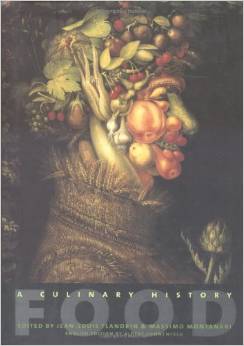
I know, I’ve been irresponsible to you, my readers. I haven’t been terribly inspired lately about creating new recipes. I’ve been consuming a book on Food History that’s 550 pages of dense reading. It covers the history of food from late pre-historic to modern times. I really need to finish this book. I’ve also been reading a few other vegan cookbooks published this last year, both for ideas, and reviews. I’ll be writing about those soon.
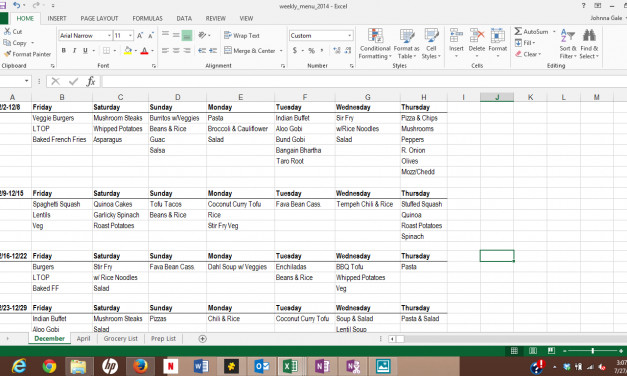
It still does not explain my inexplicable blogging silence. I’ve been working, and trying to get the household food cost under control. I have instituted a weekly menu, that includes a grocery shopping list, and a prep list. The idea comes from the Happy Herbivore. She provides readers with menus, so that they can go and cook yummy, healthy vegan food without worry. I doubt I’ll ever be that industrious. The menus I am creating are based on what I’ve discovered my partner likes to eat. And believe me, this has taken years.

I like the weekly menu because it gives us a plan to follow. It takes the guess work out of what am I cooking after a hard day’s work, creating less stress about cooking when I get home (especially while I’m at work). A weekly menu also provides left-overs for lunches over the next few days, so that the Partner has food to eat. This cuts back on food cost because we aren’t buying so many of the pre-packaged food that she relies on all too often (yes it happens). I don’t like the weekly menu plan because it takes some of the spontaneity away from cooking. I’m impulsive, and like to try new things. I’ve been known to go to a grocery store at 10 p.m. at night because I’ve just got to try something new. This also saves on food because I’m not running around town looking for one specific item. I stick to the menu, I stick to the shopping list, I save $$. We have talked about reserving one or two times a month for me to go off on culinary fits. I think it is a necessary valve for a Chef to have a bit of creative freedom.

We’ll see how long I keep this up. The weekly menu is an awesome idea. Last week was the first week, and it did help provide the structure I need in order to get fresh food on the table every day. Lastly, the best thing is I can take one of my days off and bulk cook some of the food for the week. Yes I’m cooking every day, but cooking the beans and rice, and other prep-intensive items on just one day removes even more stress from the every day cooking. And really, cooking should be stress free. There’s just a lot of planning involved.

Share

Struggling with Inspiration

Was it ambitious of me to take on writing five days a week through the month of October? I have so much to write about yet I sit here, looking for a topic, trying to find a subject on food, and the best I can come up with is that I am not as inspired as I want to be about food. Maybe it’s because I am tired, and maybe it’s because I’m not cooking as much. Still, I love to write, and am excited at the prospect of keeping this up through the rest of the month.
If any of you have ideas for topics, or something you would like to learn about food, please let me know. I’ll research the subject and write about it. Hopefully tomorrow I can sit down and block out some topics for the next two weeks. That’s only 12 more posts. I’m sure a seasoned and informed chef like myself can come up with 12 topics that you, the reader, would want to read.

Food is my passion and my love. It should be easy to write about what I love. They say if you want to be a successful writer, write about what you love, and I love food. This article may not be about food with a recipe or with information or history, but it is about the process of writing about food. I stated last year that I would write about the process of becoming a food writer.  The struggle is part of the process.

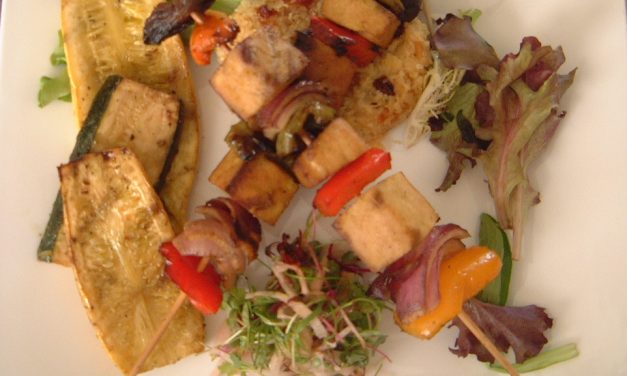
So with these thoughts I’ll leave you with a photo of some amazing food that I’ve created.

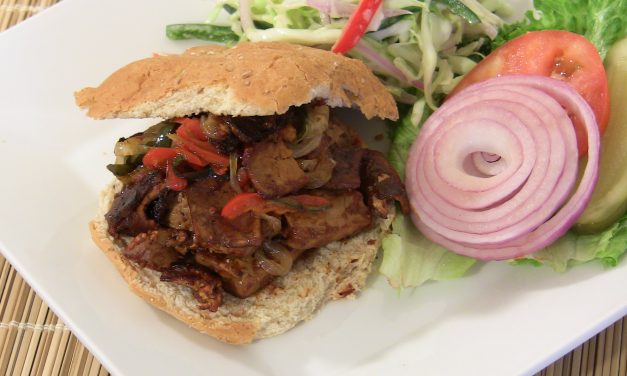
BBQ Seitan

Share

A Little Bit About Eating Vegan

Nightshades VegetablesI struggled for years with being full on vegan. I had all sorts of excuses. As the years progressed I would fall back to consuming meat and animal food products like butter, eggs, and cream. I love that stuff. It is my comfort food. The other reason was that I couldn’t find any decent vegan food on the grocery store shelves. Frozen dinners and canned food usually had some animal food in it. It was near impossible to get good prepared meals. So I had to cook the food myself, or eat what was on the shelves.

The journey of becoming a chef taught me technique, knife skills, and a love of all food. I rediscovered what I once knew as a child, when I stayed at my grandparents farm. I love to cook, and I love vegetables, salads of all kinds, and fruit. I am really fond of fruit. I’ve taken these skills and applied them to my own kitchen. But for those down days, when I’m tired, or haven’t had time, the partner buys prepared foods. And thank goodness for Amy’s Kitchen, a small company that started in 1987, with a small distribution. They have grown into delivering to major grocery stores, and smaller independent markets. We usually have several entrees and several cans of chili and soup in the house, just in case.

But as an almost vegan, I also have dining choices, which 10 years ago, especially in larger markets, was virtually impossible to find. Unless you went to a local burrito joint and ordered a rice and bean burrito, finding vegan take-out was a challenge. (If the beans weren’t cooked with lard, and the rice cooked with chicken stock).

Today, I have not only one, but half a dozen choices in Phoenix. Smaller restaurants like Green New American Vegetarian, and the chains, like Pei Wei serve fine vegan food. There’s new places that pop up and show us staying power, like Pomegranate Cafe, that serves raw, vegan, and vegetarian food.

My kitchenI spend a lot of time in my kitchen at home. As a vegan and a chef, I have no reason to be eating prepared meals. I make tried and true dishes, like Portabello Mushroom Burgers, or Orange Glazed Tofu Cutlets with Steamed Broccoli and cauliflower, or something as simple as Stir Fry and Rice. I also have a passion for creating new dishes for the non-foodie Partner to try.

I am especially grateful for the explosion of vegan food blogging. I would still be floundering a bit for recipes and inspiration without this delightful community. I discovered The PPK and Vegweb early on, and they are still my go to websites for recipes and information, although search engines on the internet have come a long way with finding recipes. I do have a list of my favorite food writers/bloggers that I check in with on a regular basis. Without all of you, I would not be as confident cooking vegan cuisine. We’d still be eating mainly rice and bean burritos and veggie sautes. Over the years I have conquered my fear of tofu and have delved into the depths of grains and legumes. I’ve come to love split peas and dahl and my all time favorite, the chickpea.

Orange glazed TofuAs this month progresses, I’ll be writing more about each of the dishes I create, and a bit of history behind the food we eat.

Enjoy!


Share

Coming up on Kitchen Shaman

I’ve taken a little hiatus from writing. Yes, recipes have been posted, but the food knowledge and history and the perspective columns have been suffering. I promise to get back to writing in both these areas later in September.

Recently, I’ve been working on re-developing the website, and that involves taking lots and lots of photographs. Once the photographs are taken they then have to be cataloged with keywords and other such technical fun stuff, and uploaded to the server so that i can eventually share them with you, the reader. It is a phenomenal task, and one that is hard to concentrate on while working a full time job, a part-time job, and writing for this blog.

I don’t mean to sound like a whiner, but when we are done re-designing this site, it will be worth the wait. Some of the photographs I’ve taken are true “money” shots. Others are good, and will appear on this blog throughout the next year. I might submit one or two to FoodGawker, we’ll see. In the meantime, enjoy a little of the fruits of my labors.

Chopped Veggies


Share

Check Audio Please

It’s been over a year since I shot the last round of videos. I borrowed a high quality camera, and scheduled a production date. I proceeded to do the requisite preparations: I wrote video scripts and shot sheets, and trained the Partner on the language of television production, and how to use the video camera. (We both agreed that the day of shooting is not the time to have a pre-production meeting).
A friend was kind enough to open their home to us as a “set.” (I have a very teeny tiny kitchen right now). They got involved and helped us with lights and placement of microphone. The shooting went well. Between setting everything up, including the food, and tear down, it only took three and a half hours. The total amount of video shot was around 40 minutes. Completed videos will equal 5 minutes. Time-wise we did well.

I was pleased with most of my performance. The Partner made cue cards for me in PowerPoint, and the laptop sat right under the camera so I could “talk” to the camera. I had less word fumbling using those beautiful cue cards.

With the professional lights, the video looked better too. Unlike in “Apple Poblano Chutney,” there is full frontal lighting! I was so excited that the day was relaxing, fun, and a group project.

The disappointment came when we got home and I checked the video footage. There is a major audio buzz running throughout the footage. There are things that you cannot correct in editing: Bad Video and Bad Audio are two of them. I could cobble together a decent little video with all the close ups we shot and add a voice-over, but that would defeat the purpose of the video: me in front of the camera, showing tips, tricks, and making the food.

I went out and bought a cheap ass microphone today to use with the really nice camera that I have on loan. We’ll have to re-shoot the video, which means getting it all the food and equipment together and dragging it over to the friend’s house, setting everything up, and doing it all over again. I look forward to making the video, it’s all the schlepping that isn’t pleasant. I can’t afford to rent a studio, and really, I enjoy making my own videos. It means all that college experience pays off.

So, hopefully, I’ll get some more footage next week, and have new videos to share with you soon. With any luck, you can look forward to “How to Clean a Cantaloupe”, and “How to Make (Garlicky) Hummus.”

Share